Victor Mwandila (born 1990) is a Zambian technology enthusiast and engineering student whose interests span embedded systems, educational technology, software development and creative projects. His work explores how practical engineering can address everyday needs, particularly where access to technology or connectivity is limited.
Raised in Mkushi, Zambia, Mwandila describes an early fascination with reading, mathematics, radios, music and building things. His personal archive traces his childhood, move to Lusaka, experiences in education, and later interests in technology and faith.
One formative influence was his primary-school teacher Mr. Mulala, who introduced him to a visual method of multiplication—known as lattice multiplication—when he struggled with the conventional written method. Mwandila later developed a place-value explanation of the method and presented it successfully at school, provincial and national JETS competitions in 2004. See 2004 JETS mathematics competition.
About this page: This is a personally maintained biographical archive inspired by the organization of an encyclopedia. It is not a Wikipedia article and is not independently edited.
Early life
Mwandila was born in 1990 and grew up in an extended family in Mkushi. His childhood included farming, outdoor exploration, family music-making and activities at church. He attended Chibefwe Primary School, beginning Grade 1 in 1996.
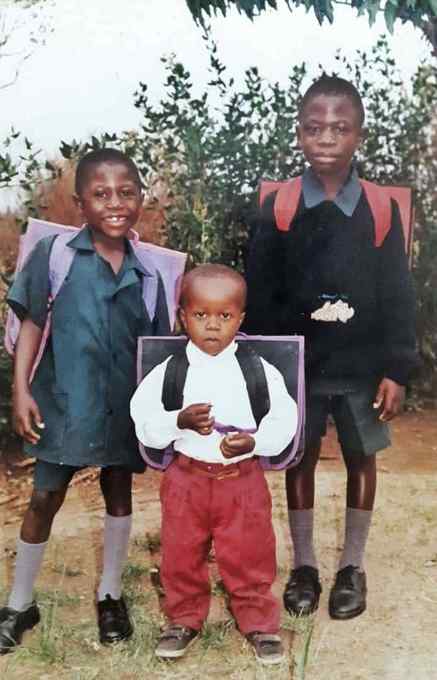
Childhood curiosity
His early memories include experimenting with handmade toys, learning how letters form words, watching relatives explore radio electronics, and encountering a computer for the first time. These experiences contributed to a lasting interest in understanding how things work.
“On my first day back from school, I searched for anything to read.” — Recollection from his early school years
Life and education
Born in Zambia.
Began Grade 1 at Chibefwe Primary School in Mkushi.
Family relocated through several homes in Mkushi and subsequently to Lusaka.
Won first place in the Junior Secondary Mathematics Project category at the national JETS competition in Lusaka, following first-place results at school and provincial stages.
Presented an eco-friendly business card concept at Hochschule Rhein-Waal.
Continued documenting personal experiences and technology projects.
Additional milestones will be added with dates and supporting records.
Secondary education: 2004 National JETS Mathematics Competition
In 2004, while studying in Grade 9 at St. Francis Secondary School in Malole, Mwandila presented a project explaining a multiplication technique introduced to him years earlier by his Chibefwe Primary School teacher, Mr. Mulala. Called “magic multiplication” in his recollection, the technique is generally known as lattice multiplication: a rectangular grid divided diagonally to organize partial products and their place values. His explanation used the language of ones, tens and hundreds to show why the calculation worked.
His Grade 9 teacher, Brother Phiri, directed him to Mr. Bulanda, a senior secondary physics teacher at St. Francis who also became an influence on his interest in physics. The fuller account of Mr. Bulanda's mentorship and boarding-school life remains to be documented.
INTERACTIVE MATHEMATICS · 2004 JETS PROJECT
Magic Multiplication Lab
Explore the lattice multiplication method that Mr. Mulala taught Victor. Enter two whole numbers, then follow the grid, partial products and place-value additions.
Whole numbers only, up to 8 digits each. The diagram scrolls horizontally for larger numbers.
From Mr. Mulala to the national JETS competition: this interactive teaching aid illustrates the method Victor explained using ones, tens, hundreds and higher place values.
Competition results
- School stage — St. Francis Secondary School, Malole: first place among competing schoolmates; selected to represent the school in the Junior Mathematics Project category.
- Provincial stage — Kasama Girls High School, Kasama: first place representing St. Francis; qualified to represent Northern Province.
- National stage — David Kaunda boarding school, Lusaka: first place representing Northern Province, winning Best Junior Secondary Mathematics Project.
According to Mwandila's firsthand account, he won first place at all three stages. The project grew from a primary-school lesson designed to help him overcome difficulty with conventional multiplication into a nationally recognized student mathematics presentation.
Source status: The year, locations, placements and award title above are recorded from Mwandila's firsthand recollections. Independent certificates, programs or school records have not yet been added to this archive.
Engineering projects
Projects in development and prototyping include:
PrintBox
A concept for a self-service printing kiosk integrating file submission, payments and printer control.
Offline educational AI
An offline-first system intended to help teachers prepare simplified learning materials and exercises.
Local connectivity and media
Explorations of local wireless networks and media access in contexts with limited internet connectivity.
Research and academic work
University of Namibia
Selected individual coursework, research proposals and engineering project drafts from Mwandila’s studies in Namibia. These documents record work in electronics, communication networks and software development.
Student works, not peer-reviewed publications. Public copies remove student identifiers; the NamPost project is an excerpt. Each work has a page explaining its authorship and document status.
The Herald: A Post Box Notification System for NamPost
A prototype for notifying postal customers when mail arrives. The draft describes a Raspberry Pi server, a PHP/MySQL dashboard, QR codes, and email and SMS notification mechanisms.
Smartphone Lithium-Ion Battery Capacity
A proposal to investigate how temperature, amperage and charging patterns affect the charge capacity of smartphone lithium-ion batteries. It includes a literature review, proposed methodology and project plan.
Wireless Communication Self-Learning Report
A study of the evolution of wireless telephone networks, from analogue systems to 2G, 3G, 4G and emerging 5G technologies as understood at the time of writing.
A Comprehensive Study on Wired Local Area Networks
A study of wired LAN communication, introducing network components and the organisation of local area networks.
Implementation of Huffman Coding in MATLAB
A design exercise examining source coding and implementing Huffman coding in MATLAB to represent source data efficiently.
Programming Languages, Agile Methods and UML
An introductory research assignment covering programming language categories, extreme programming, agile development methods and Unified Modeling Language.
Other records in the academic archive
Further records include an Embedded Systems 2 project submission (2017), a research proposal draft (2017), and a Team 4 project management transfer report (2017). These are not available here yet: their contents and, for group work, individual contributions still need review.
Photographs and media
Further photographs from childhood, university activities and worship gatherings are being catalogued. Video links and related documentation will be added after review.
Faith and interests
Mwandila describes growing up in a Christian household and participating in Sunday school, music and church activities. Music, storytelling and spiritual reflection remain recurring subjects in his autobiographical material.
Sources and notes
- Mwandila, Victor. Unpublished autobiographical recollections supplied for this website.
- Mwandila, Victor. Firsthand recollection of the 2004 JETS mathematics project competitions at St. Francis Secondary School, Kasama Girls High School and David Kaunda school in Lusaka. Supporting external records pending.
- Mwandila, Victor. Personal photograph archive: eco-friendly business card presentation (2019).
- Mwandila, Victor. University of Namibia coursework and project documents, 2015–2017 and undated. Public copies in the academic archive.
This page distinguishes personal recollections from independently verified sources; external references will be added as they become available.